
Tartar Removal: The Key to a Healthy Smile in Prague
What is tartar and how does it form?
Dental tartar (technically calculus dentis) is a hard, mineralized coating that adheres firmly to the surface of the teeth, especially near the gums and in the interdental spaces. It is formed by the gradual mineralization of soft dental plaque. Dental plaque is a sticky, colorless or yellowish film made up of bacteria, food debris, and saliva that constantly forms on the teeth.
If dental plaque is not regularly and thoroughly removed by proper tooth and interdental brushing techniques, minerals contained in saliva (primarily calcium and phosphates) begin to settle in it. This mineralization process leads to the gradual hardening of the plaque and its transformation into dental tartar. The rate of tartar formation is individual and depends on many factors, including the composition of saliva, eating habits and level of oral hygiene.
There are two types of tartar:
- Supragingival tartar: Forms above the gum line, is usually yellowish or whitish and is more easily visible. It is most often found on the inside of the lower front teeth and on the outside of the upper molars, i.e. near the ducts of the major salivary glands.
- Subgingival tartar: Forms below the gum line, in the so-called gingival groove or periodontal pocket. It has a darker color (brown to black) caused by the presence of blood pigments and is much more dangerous because it directly irritates the tissues of the tooth’s supporting apparatus. Its presence is often associated with gingivitis and periodontitis.
Why is tartar dangerous?
Tartar is not just an aesthetic problem. Its porous surface provides an ideal haven for other bacteria that produce toxins and acids. This leads to a number of health complications:
- Gingivitis: The first stage of gum disease. It is manifested by redness, swelling and bleeding of the gums, especially when brushing your teeth. Tartar mechanically irritates the gums and the bacteria contained in it cause an inflammatory reaction.
- Periodontitis (periodontitis): If gingivitis is not treated, the inflammation progresses deeper and attacks the tooth’s supporting structure (bone, ligaments). Periodontal pockets (pockets between the tooth and gum) develop, bone loss occurs, teeth become loose and ultimately lose them. Subgingival tartar is a major contributing factor to the development and progression of periodontitis.
- Bad breath (halitosis): Bacteria living in tartar and plaque produce sulfur compounds, which are the main cause of bad breath.
- Aesthetic problems: Tartar has an unsightly color and can also cause teeth to stain from coffee, tea, or smoking, which adhere more easily to its rough surface.
- Increased risk of tooth decay: Bacteria in plaque and tartar produce acids that erode tooth enamel and lead to tooth decay, especially in areas where tartar makes cleaning difficult.
- Systemic health risks: Chronic inflammation in the oral cavity associated with periodontitis can have a negative impact on overall health. Bacteria and inflammatory substances can enter the bloodstream and increase the risk of cardiovascular disease, diabetes, respiratory infections and other health problems.
It is important to remember that tartar cannot be removed by regular brushing and flossing. Once plaque has mineralized, professional intervention by a dental hygienist or dentist is necessary.
Professional tartar removal at Dobrý Dent
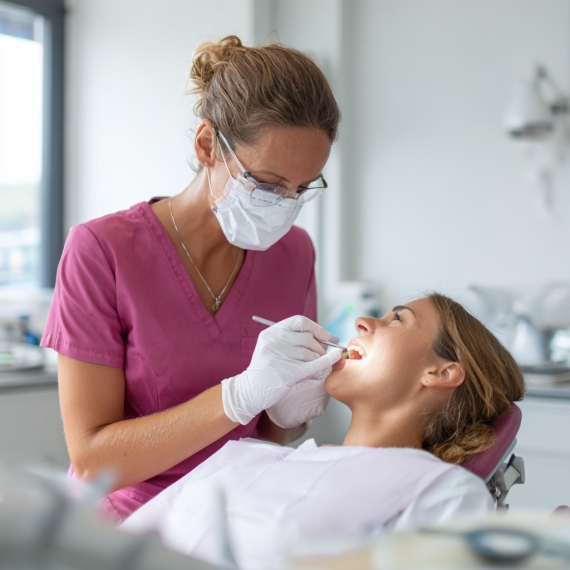
At our clinic Dobrý Dent in Prague 5, we approach tartar removal, also known as dental hygiene or scaling, with the utmost care and professionalism. The goal is not only to remove all tartar and plaque, but also to smooth the surface of the teeth to make it more difficult for it to re-deposit, and to provide the patient with instructions for proper home care.
How is the treatment performed?
The tartar removal procedure usually consists of several steps:
- Examination and diagnosis: At the beginning, a dental hygienist or doctor will carefully examine the condition of your oral cavity, assess the amount and location of tartar, the condition of your gums, and the presence of any periodontal pockets. We use modern diagnostic methods, including the possibility of a detailed view using a dental microscope for maximum accuracy, and in more complex cases, 3D CBCT X-rays to assess the condition of the bone.
- Removal of supragingival and subgingival calculus: An ultrasound device is most often used for the removal itself. Its thin tip vibrates at a high frequency and is cooled by a stream of water. The vibrations effectively disrupt the structure of the tartar, which is then easily washed away with water. Ultrasound is very effective and gentle on dental tissues. Special hand tools (curettes and scalers) are also used to clean hard-to-reach places and areas under the gums.
- Polishing: After removing all the calculus, the surface of the teeth is polished using a special rotary rubber or brush and polishing paste. This removes the remaining pigmentation and makes the tooth surface perfectly smooth. A smooth surface is more resistant to the deposition of new plaque and tartar.
- Airflow (Sandblasting): In some cases, especially with stronger pigmentation from coffee, tea, wine or smoking, the airflow method can be used. This involves gentle sandblasting of the tooth surface with a mixture of water, air and fine powder (usually based on sodium bicarbonate or glycerin), which effectively removes even stubborn stains and gives the teeth a naturally lighter appearance.
- Instruction and recommendations: An integral part of the visit is individual instruction on the correct technique for brushing your teeth, the use of interdental brushes or dental floss, and recommendations for suitable home care tools. The goal is to help you maintain a healthy mouth for as long as possible.
Is tartar removal painful?
Most patients perceive tartar removal as painless, although slightly unpleasant (vibration, scraping, water jet). Sensitivity may be increased in patients with exposed tooth necks or gingivitis. At Dobrý Dent, we ensure maximum patient comfort. For very sensitive individuals or when removing deep subgingival tartar, we offer the option of local anesthesia. We have a modern STA (Single Tooth Anesthesia System) system, which allows computer-controlled, slow and virtually painless administration of anesthetic, often only to individual teeth, which increases comfort and minimizes discomfort after treatment.
Benefits of regular tartar removal at Dobrý Dent
Regular dental hygiene visits at our clinic in Prague 5 bring a number of benefits:
- Prevention of gingivitis and periodontitis: By removing the cause (tartar and plaque), you prevent the onset and development of these diseases and thus protect your teeth from loss.
- Healthier and stronger gums: Without irritation from tartar and bacteria, gums are pink, firm and do not bleed.
- Fresh breath: Eliminating bacterial deposits in tartar leads to the elimination of bad breath.
- Smoother and cleaner teeth: Removing tartar and pigmentation leaves teeth smooth and naturally whiter.
- Prevention of tooth decay: A clean tooth surface without plaque and tartar is less prone to caries.
- Early diagnosis: During dental hygiene, a hygienist or doctor can detect incipient problems (caries, inflammation) and recommend early solutions.
- Overall health: Maintaining a healthy oral cavity contributes to the prevention of systemic diseases.
- Professional care and modern technology: At Dobrý Dent, we use the most modern procedures and technologies (ultrasound, airflow, microscope, STA, 3D scanner, CBCT) to ensure the highest quality and comfort of care. Our team has extensive experience gained since 2010.
- Individual approach: We devote sufficient time to each patient and tailor care to their individual needs.
How often should you have tartar removal?
The frequency of dental hygiene visits is individual. It is generally recommended to have professional teeth cleaning and tartar removal twice a year. Patients with increased tartar formation, smokers, diabetics or patients with periodontitis may need to visit more often, for example every 3-4 months. Your dentist or dental hygienist at Dobrý Dent will recommend the optimal interval for you after the examination.
Prevention of tartar formation
While professional tartar removal is essential, consistent home care is also key:
- Proper brushing technique: Brush your teeth at least twice a day for at least two minutes with a soft toothbrush and fluoride toothpaste. Focus on the gumline area, where plaque accumulates the most.
- Using interdental brushes: A toothbrush only cleans about 60% of the surface of your teeth. Using the right size interdental brushes or floss daily is essential for removing plaque from between your teeth.
- Mouthwashes: Antiseptic mouthwashes can complement mechanical brushing, but they are not a substitute for it. They help reduce the amount of bacteria in the mouth.
- Healthy diet: Limit consumption of sugary and sticky foods and drinks that promote bacterial growth and plaque formation.
- Don’t smoke: Smoking significantly increases the risk of gum disease and tartar formation.
- Regular check-ups and dental hygiene: Follow the recommended intervals for preventive check-ups and dental hygiene visits at Dobrý Dent.
Conclusion: Invest in your health at Dobrý Dent
Dental tartar is the silent enemy of a healthy smile. Its timely and regular removal is the basic pillar of preventing gingivitis, periodontitis and other complications. At the Dobrý Dent dental clinic in Prague 5 (Anděl), we offer you comprehensive dental hygiene care, based on expertise, experience since 2010 and the use of cutting-edge technologies such as a dental microscope, painless STA anesthesia or modern imaging methods (3D intraoral scanner, CBCT). Our goal is not only to clean your teeth perfectly, but also to motivate you and teach you how to properly care for your teeth at home.
Don’t wait for problems to appear. Take care of your oral health actively and treat yourself to the feeling of perfectly clean teeth and healthy gums. We believe that the modern and pleasant environment of our clinic and the individual approach of our team will contribute to your satisfaction.