
Gnatology: Comprehensive care for your bite and jaw joint in Prague
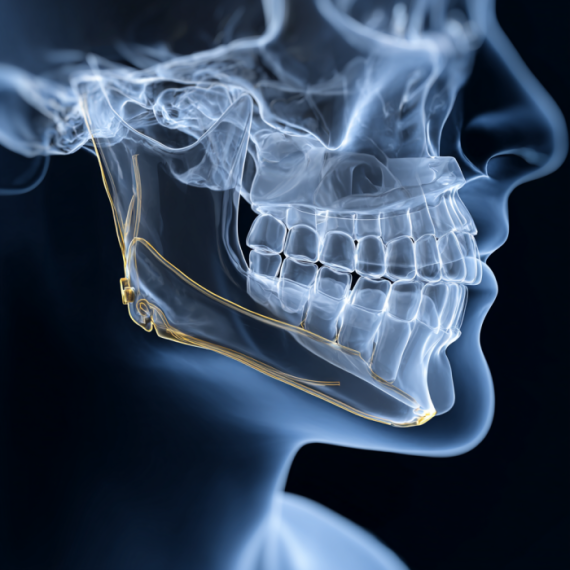
What exactly does gnathology address?
Gnatology is a comprehensive discipline that focuses on the harmony of the entire chewing apparatus. Its goal is to ensure that all its components – teeth, muscles and joints – work in perfect harmony. Any disruption of this balance can lead to problems. A gnathologist therefore deals with:
- Occlusion analysis: Examines how the upper and lower teeth meet when biting and during chewing movements. An incorrect bite can overload the teeth, muscles and joints.
- Function of the jaw joints: Diagnoses problems such as clicking, skipping, pain or limited movement in the TMJ.
- Activity of the masticatory muscles: Assess the tension, pain and function of the muscles responsible for moving the lower jaw. Overworked muscles are a common cause of headaches and facial pain.
- Effects on other parts of the body: Gnathological problems can also be related to cervical spine pain, migraines, tinnitus (whistling in the ears) or even posture disorders.
- Planning complex dental reconstructions: Before extensive prosthetic work (bridges, crowns, implants), a gnathological examination is key to ensuring long-term functionality and stability of the result.
The most common gnathological problems we encounter
Patients often come to us at Dobrý Dent with the following problems that fall into the field of gnathology:
- Pain in the jaw joint area: It can be dull or sharp, aggravating occurs when chewing or speaking.
- Snapping, cracking, or popping in the temporomandibular joint: Sound phenomena when opening or closing the mouth.
- Limited mouth opening or „jamming“ Jaws: Difficulty opening the mouth fully or feeling that the jaw cannot be closed/opened freely.
- Bruxism (teeth grinding or clenching): Often unconscious activity, especially at night, leading to tooth wear, muscle pain, headaches and damage to dentures.
- Headaches and migraines: In particular, tension headaches localized in the temples, forehead or back of the head may originate from overworked masticatory muscles.
- Ear pain or feeling of being stuck: Without an obvious ear cause (ENT findings are negative).
- Facial and cervical spine pain: Tension of the masticatory muscles can also be transmitted to surrounding areas.
- Excessive wear Teeth: Plates on the teeth, shortened teeth, exposed necks or enamel cracks can be the result of a bad bite or bruxism.
- Tooth sensitivity: Sometimes it can be caused by overloading the teeth due to an incorrect bite.
These symptoms can significantly affect daily life, from discomfort when eating to chronic pain and sleep problems. Therefore, early diagnosis and treatment are essential.
Why do problems with the jaw joint and bite arise?
The causes of gnathological disorders are often multifactorial, which means that multiple factors contribute to their development simultaneously. The most common include:
- Stress and psychological tension: Leads to unconscious clenching of the teeth and overexertion of the masticatory muscles, especially during sleep.
- Incorrect bite (malocclusion): Congenital defects of the bite, or a bite changed by the loss of teeth, inappropriate fillings or prosthetic work.
- Tooth loss: Missing teeth lead to changes in the bite, shifts of other teeth and uneven loading.
- Injuries to the face or jaw: A direct impact can damage the joint or surrounding structures.
- Arthritis and other joint diseases: Systemic diseases can also affect the jaw joint.
- Inappropriate dental treatment: Too high fillings or crowns can disrupt the harmony of the bite.
- Poor posture: Head forward and poor cervical spine position can affect the tension of the chewing muscles.
- Habits: Nail biting, chewing on one side, resting the chin on the hand.
Identifying the cause or combination of causes is key to creating an effective treatment plan.
Diagnostics in gnathology: The key to successful treatment at Dobrý Dent
Correct diagnosis is the basis for successful treatment of gnathological problems. At Dobrý Dent, we place special emphasis on the diagnostic phase and use not only our many years of experience (we have been operating since 2010), but also cutting-edge technologies. The process usually includes:
- Detailed medical history: We will discuss your problems, their nature, duration, triggers and related factors (stress, injuries, previous treatments) in detail with you.
- Clinical examination:
- Examination of the temporomandibular joint: Palpation (feeling) of the joint and surrounding muscles to determine pain, monitoring the movement of the jaw when opening and closing the mouth, listening for sound phenomena (popping, cracking).
- Examination of the masticatory muscles: Palpation to determine tension, pain and trigger points.
- Occlusion analysis: Assessment of the contact of the teeth in the bite, detection of premature contacts or uneven load.
- Evaluation of the condition of the teeth: Checking the wear of the teeth, the condition of the fillings and prosthetic work.
- Instrumental diagnostics:
- Digital X-rays (OPG): Provide a basic overview of the condition of the teeth and jaws.
- Advanced 3D imaging (CBCT): At our Dobrý Dent clinic, we have a modern 3D CBCT X-ray. This examination allows us to obtain a detailed three-dimensional image of the bone structures of the temporomandibular joint, teeth and jaw bones. It is invaluable for accurate diagnosis of joint changes (arthritis, post-traumatic conditions), tooth position and treatment planning.
- Digital bite scan (3D intraoral scanner): Instead of unpleasant impressions, we use a 3D intraoral scanner. This creates an accurate digital model of your teeth and bite in a few minutes. We can analyze this model on a computer, simulate jaw movements, and plan treatment (e.g., bite splint design) with maximum precision.
- Articulator: In some cases, tooth models are mounted in a special device (articulator) that simulates the movements of your jaw joint and allows for detailed analysis of the bite outside the patient’s mouth.
Thanks to a combination of a careful clinical examination and the use of modern diagnostic technologies, such as CBCT and 3D scanner, we at Dobrý Dent are able to accurately identify the cause of your problems and suggest the most appropriate treatment.
Treatment options for gnathological problems
Treatment of gnathological problems is always individual and depends on the specific diagnosis, severity of the condition and causes of the difficulties. The goal is to restore the harmonious function of the chewing system, relieve pain and prevent further damage. At Dobrý Dent we offer a wide range of treatment methods:
- Conservative therapy:
- Bite splints (Occlusion splints): They are one of the most common and effective tools. These are individually made removable appliances (usually made of resin) that are worn on the teeth (most often at night). They protect the teeth from wear during bruxism, help relax the chewing muscles and can stabilize the position of the temporomandibular joint. Thanks to our 3D scanner, splints are manufactured with maximum precision for your comfort and efficiency.
- Physiotherapy and exercises: Special exercises can help relax tight muscles, improve jaw range of motion, and strengthen muscle coordination. We can recommend working with a specialized physiotherapist.
- Stress management: Relaxation techniques, meditation or psychotherapy can be very beneficial if the main cause is stress.
- Medication: Painkillers and anti-inflammatory drugs or muscle relaxants (muscle relaxants) may be prescribed for the short term.
- Patient education: We will advise you on appropriate habits (avoiding hard foods, chewing on both sides, proper posture).
- Bite adjustments:
- Equilibration: Subtle adjustments to the shape of teeth or fillings to remove premature contacts and achieve a more even bite.
- New fillings, crowns, Bridges: If the problem is caused by inadequate dentures, their correction or replacement is necessary.
- Orthodontic treatment: In cases of more significant bite defects, braces may be the solution to correct the position of the teeth.
- Prosthetic solution: Replacing missing teeth with implants, bridges or dentures is key to restoring bite stability.
- More invasive methods: They are reserved for serious cases that do not respond to conservative treatment (e.g. arthrocentesis – joint lavage, or surgical procedures on the joint). These procedures are usually performed by a specialist in maxillofacial surgery, with whom we work closely.
At Dobrý Dent, we make sure that all treatments are as pleasant as possible. To ensure your comfort, we use modern methods of pain relief, including computer-controlled anesthesia STA, which allows for painless and precise administration of anesthetic.
Why choose Dobrý Dent for solving gnathological problems in Prague?
Choosing the right place to solve complex problems, such as gnathological ones, is essential. The Dobrý Dent Clinic in Prague 5 (Anděl) offers you several reasons to entrust your care to us:
- Experience and expertise: Our doctors have extensive experience in diagnosing and treating gnathological disorders, which we have been collecting since 2010. We regularly educate ourselves in this specialized field.
- Leading technologies: We invest in modern equipment that allows us to provide care at the highest level. Our 3D CBCT X-ray and 3D intraoral scanner are key to accurate diagnosis and treatment planning of gnathological problems. We also use an operating microscope for maximum precision during treatments and painless STA anesthesia for your comfort.
- Individual approach: We know that each patient and their problem are unique. We take the time to understand your difficulties and create a customized treatment plan. We understand that gnathological problems can be a source of chronic pain and we strive for an empathetic and patient approach.
- Comprehensive care under one roof: We offer a wide range of dental services, from dental hygiene to restorative dentistry to prosthetics and implantology. This allows us to solve related problems (e.g. replacing missing teeth, adjusting the bite) directly at our clinic.
- Modern and pleasant environment: We want you to feel good with us. Our clinic in Prague 5 – Smíchov (Anděl) is designed to provide a calm and relaxing environment.
- Focus on prevention: In addition to treatment, we also emphasize prevention and patient education to prevent recurrence of problems.
Prevention of gnathological problems
Although not all gnathological problems can be completely prevented, there are steps you can take to reduce the risk of their occurrence or worsening:
- Stress management: Find techniques that help you relax (sports, yoga, meditation, hobbies).
- Proper posture: Pay attention to how you sit at the computer or stand. Avoid leaning your head forward.
- Regular dental checkups: Early detection of bite problems, tooth wear or missing teeth is key. Your dentist at Dobrý Dent can identify risk factors.
- Avoiding bad habits: Do not bite your nails, pencils, ice. Do not chew gum excessively. Try to chew your food evenly on both sides.
- Sports protection: Use a mouthguard when playing contact sports.
- Early treatment of dental problems: Don’t delay treatment of cavities or replacement of missing teeth.