
Sinus lift: The key to successful dental implants in the upper jaw
What is a sinus lift and why is it sometimes necessary?
A sinus lift is a specialized surgical procedure that aims to increase the amount of bone in the back of the upper jaw, specifically in the area between the jawbone and the maxillary sinus. The maxillary sinuses are air-filled spaces located above the roots of the upper premolars and molars. When these teeth are lost, the bone that previously surrounded and supported them begins to gradually decrease (resorb). This process is natural, but it can lead to a situation where the remaining bone height is not sufficient for the safe and stable insertion of a standard-length dental implant.
Main reasons why a sinus lift may be needed:
- Bone resorption after tooth extraction: After a tooth is extracted, the bone in the area ceases to fulfill its function of support and the body begins to gradually break it down. This process is fastest in the first few months after extraction, but continues long-term.
- Anatomical conditions: Some people naturally have larger maxillary sinuses or a thinner bone septum between the cavity and the oral cavity.
- Advanced periodontal disease (periodontitis): Chronic inflammation of the gums and the supporting apparatus of the tooth can lead to extensive bone loss around the teeth even before their extraction.
- Long-term use of removable dentures: The pressure exerted by a removable prosthesis on the toothless ridge can accelerate bone resorption.
- Age: With age, there may be a slight enlargement of the maxillary sinuses and an overall loss of bone mass.
Without sufficient bone volume, the inserted implant would not have the necessary primary stability, it could interfere into the maxillary sinus, which would lead to its failure or complications. Sinus lift thus creates the necessary bone foundation for a successful and long-term functional implantation.
How is the sinus lift performed at Dobrý Dent?
At our clinic Dobrý Dent, we approach each patient individually. The sinus lift process begins with a thorough consultation and diagnosis.
1. Consultation and precise planning using 3D CBCT
The first step is a detailed consultation with our experienced dental surgeon or implantologist. We will discuss your medical history, your expectations and explain the entire procedure. A key part of the planning is taking a 3D CBCT (Cone Beam Computed Tomography) scan. This modern X-ray examination provides us with a detailed three-dimensional image of your upper jaw, maxillary sinuses and surrounding structures. Thanks to CBCT, we can accurately measure the height and width of the existing bone, assess the condition of the maxillary sinus (exclude inflammation or other pathologies) and plan the procedure with maximum precision. We can see the exact position of the maxillary sinus membrane (Schneiderian membrane) and important anatomical structures, which minimizes risks during the operation.
2. Preoperative preparation
Before the procedure itself, it is important to ensure optimal conditions in the oral cavity. This may include professional dental hygiene, treatment of any cavities or gingivitis. In some cases, premedication may be recommended (e.g. antibiotics to prevent infection).
3. The surgical procedure itself
Sinus lift is performed under local anesthesia. At Dobrý Dent, we use the computer-controlled anesthesia STA (Single Tooth Anesthesia) system, which ensures maximum comfort and painless administration of anesthetic. Patients often describe the procedure as being almost imperceptible.
There are two main types of sinus lift:
- Lateral (open) sinus lift: This approach is used when more bone augmentation is needed. The surgeon creates a small window in the side wall of the jaw above the location of the missing teeth. The thin membrane lining the maxillary sinus is carefully lifted upwards, creating a space between the membrane and the floor of the cavity. This space is then filled with bone augmentation material (bone graft).
- Crestal (closed, internal) sinus lift: Used when only a slight increase in bone is needed (usually 1-3 mm). Access to the cavity is created through an opening prepared for the implant itself. Special instruments are used to carefully lift the membrane and apply a small amount of bone graft underneath it. It is often possible to insert an implant at the same time as this type of sinus lift.
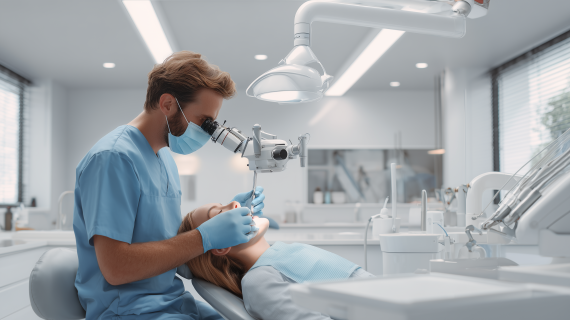
The choice of method depends on the amount of missing bone and the individual anatomy of the patient, which we will determine precisely thanks to a CBCT examination. During the operation, we often use an operating microscope, which allows us to work with maximum precision, better visualize fine structures such as the maxillary sinus membrane and thus minimize the risk of damage to it.
4. Materials for bone replenishment (bone grafts)
The space created under the raised membrane is filled with a material that will support the formation of new bone. This may be:
- Autogenous graft: Bone taken from another part of the patient’s body (e.g. from the chin, angle of the lower jaw). It is considered the „gold standard“ due to the content of its own cells that support healing, but requires an additional harvesting site.
- Allogeneic graft: Specially prepared and sterilized human bone from a donor.
- Xenogeneic graft: Bone of animal origin (most often bovine – beef or porcine – pork) that has been processed to be safe and biocompatible. It serves as a „scaffold“ for the growth of its own bone.
- Alloplastic (synthetic) material: Artificially created materials (e.g. based on hydroxyapatite or tricalcium phosphate) that mimic the structure of bone.
The choice of material depends on the extent of augmentation, the preferences of the surgeon and the patient, and the specific clinical situation. At Dobrý Dent, we use only certified and proven materials of the highest quality.
5. Wound closure and healing
After filling the space with bone graft, a special barrier membrane can be placed over the augmented material to protect the graft and support controlled tissue healing. The surgical wound is then carefully sutured with fine stitches.
This is followed by a healing period that usually lasts 6 to 9 months. During this time, the bone graft integrates with the surrounding bone and new, solid bone tissue is formed, which is able to provide a stable foundation for the dental implant. The length of healing is individual and depends on the extent of the procedure, the material used, and the patient’s healing ability.
Benefits of sinus lift at Dobrý Dent Prague
- Enablement of implantation: The main advantage is the creation of sufficient bone volume for safe and successful placement of dental implants in the posterior part of the upper jaw.
- Long-term stability of implants: Thanks to a solid bone base, implants placed after a sinus lift have a high success rate and long-term stability.
- Experienced surgeons: Our team has extensive experience performing sinus lifts and other augmentation techniques. We have helped many patients since 2010.
- Top-notch technologies: The use of 3D CBCT for precise planning, operating microscope for precise execution and painless STA anesthesia for maximum patient comfort significantly increases the safety and success of the procedure.
- Individual approach: We carefully analyze each case and propose the optimal solution tailored to the patient’s needs.
- Comprehensive care: Sinus lift is often part of a broader treatment plan including implantation and prosthetic reconstruction. At Dobrý Dent, we provide comprehensive care under one roof.
Technologies that increase quality and safety
At Dobrý Dent, we invest in modern technologies because we believe they are the key to providing the best possible care:
- 3D CBCT: Indispensable for diagnostics and planning. It allows us to see the anatomy in 3D, accurately measure the bone, identify important structures (nerves, blood vessels, the exact shape of the cavity) and plan the procedure with millimeter accuracy, which minimizes risks.
- Operating microscope: The magnification of the surgical field allows the surgeon to work with incomparably higher precision. During a sinus lift, gentle handling of the maxillary sinus membrane is key – the microscope significantly reduces the risk of its perforation (rupture), which is one of the possible complications.
- Computer-controlled anesthesia STA: Ensures slow, controlled and targeted application of anesthetic, which leads to deep anesthesia without an unpleasant feeling of pressure and with minimal anesthesia of the surrounding soft tissues (lips, cheeks). Increases patient comfort before and during the procedure.
- 3D intraoral scanner: Although not directly used during the sinus lift itself, it is important for the subsequent phase – planning and making prosthetic work on implants. It allows for accurate digital impressions without the need for classic impression materials.
Possible risks and complications
Like any surgical procedure, sinus lift carries certain risks, although these are minimized when carefully planned and performed by an experienced surgeon. Possible complications include:
- Perforation (rupture) of Schneiderian membrane: The most common complication. Small perforations can usually be treated during the procedure (e.g., with a collagen membrane). Larger perforations may require postponement of augmentation. Using a microscope significantly reduces this risk.
- Infection: The risk of infection is minimized by sterile procedures, possibly by administering antibiotics.
- Bleeding: Usually minimal and well controlled.
- Swelling and hematoma (bruising): Common postoperative symptoms that gradually disappear.
- Temporary or permanent change in sensitivity: Rarely, nerves in the area may be affected.
- Graft failure: In rare cases, the bone graft may not heal properly.
- Communication with the maxillary sinus: After the implant is inserted, a connection between the oral and maxillary sinuses may rarely occur.
At Dobrý Dent, we do our best to prevent complications through precise planning (CBCT), gentle surgical technique (microscope) and strict adherence to aseptic protocols. We will inform you in detail about all possible risks during the consultation.
Convalescence and postoperative care
After a sinus lift, it is important to follow your doctor’s instructions to ensure the best possible healing:
- Swelling and pain: Swelling of the face in the operated area is normal and usually peaks on the 2nd-3rd day after the procedure. It is recommended to apply cold compresses. The pain is usually mild to moderate and well controlled with commonly available analgesics that we will recommend.
- Bleeding: Slight bleeding or blood-tinged saliva is normal in the first few hours. In case of more severe bleeding, contact the clinic.
- Hygiene: Maintaining good oral hygiene is key, but great care must be taken in the operated area. Avoid brushing the wound directly with a toothbrush. We recommend using antibacterial mouthwash.
- Diet: In the first few days after the procedure, a soft to mushy diet is appropriate. Avoid hot drinks and foods. Do not bite on the operated side.
- Smoking and alcohol: Smoking significantly worsens healing and increases the risk of complications – it is important to completely avoid it after the operation. Alcohol is also not suitable.
- Physical activity: Avoid heavy physical exertion, lifting heavy loads and bending forward in the first week after the procedure.
- Blowing and sneezing: It is very important not to blow your nose in the first few weeks after the sinus lift! The increased pressure could damage the membrane or displace the graft. If you need to sneeze, do so with your mouth open. Your doctor may prescribe nasal drops to help relieve your nasal congestion.
- Check-ups and Stitches: Go for your scheduled check-ups. Stitches are usually removed 7-14 days after the procedure.
Following these instructions carefully is essential for successful bone graft healing and preparation for subsequent implantation.
Why choose Dobrý Dent for sinus lift in Prague?
Choosing the right clinic for a surgical procedure such as a sinus lift is crucial. At Dobrý Dent, we offer you a combination of factors that make us the ideal choice for your care in Prague:
- Experience and expertise: Our clinic has been operating since 2010 and our team of dental surgeons and implantologists has extensive experience with augmentation techniques including sinus lift.
- Modern technology: We invest in cutting-edge equipment (CBCT, microscope, STA, 3D scanner) that increases the accuracy, safety and comfort of procedures.
- Patient comfort: Your comfort and painlessness are our priority. From the pleasant environment of the clinic to the painless STA anesthesia, we strive to make you feel as comfortable as possible with us.
- Individual approach: Each patient is unique to us. We take the time to thoroughly diagnose, plan and explain all treatment options.
- Comprehensive services: We provide a wide range of dental care, from prevention and dental hygiene to complex surgical and prosthetic reconstructions. You can solve everything you need in one place.
- Convenient location: You can find our clinic in modern premises in Prague 5 – Smíchov, near Anděl, with good transport accessibility.
- Transparency: Before starting treatment, we will always provide you with a detailed treatment plan and price calculation.
If you are considering dental implants in the upper jaw and have been told that you do not have enough bone, do not worry. Sinus lift is a proven and safe procedure that may be the solution for you. At Dobrý Dent, we have the knowledge, experience, and technology to perform this procedure at the highest level and prepare your jaw for successful implant placement.