
Comprehensive dental hygiene: The basis of a healthy smile at Dobrý Dent
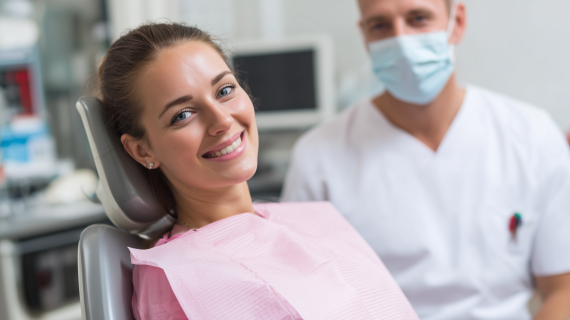
What exactly does comprehensive dental hygiene mean?
Comprehensive dental hygiene is much more than just „cleaning your teeth“. It is a set of preventive and therapeutic procedures aimed at removing all dirt from the surface of your teeth, as well as from the interdental spaces and gum line, where a regular toothbrush cannot reach. It mainly includes:
- A thorough examination of the oral cavity: Evaluation of the level of hygiene, the condition of the gums (bleeding, inflammation), the presence of tartar and plaque, the condition of fillings and prosthetic work.
- Removal of dental plaque: A soft, sticky coating formed by bacteria and food debris, which is the main cause of tooth decay and gingivitis.
- Removal of dental plaque: Mineralized (hardened) dental plaque that cannot be removed by regular brushing. It is located above the gum (supragingival) and below it (subgingival) and irritates the gums, which leads to their inflammation and gradual receding.
- Removal of pigmentation: Stains on the teeth caused by drinking coffee, tea, red wine, smoking or certain foods.
- Polishing: Smoothing the surface of the teeth with a special paste that makes it more difficult for new plaque to form and gives the teeth a shine.
- Fluoridation: Application of fluoride gel or varnish to strengthen tooth enamel and increase its resistance to acids produced by plaque bacteria.
- Instruction and motivation: Practice of proper tooth brushing technique, recommendation of appropriate tools (brushes, interdental brushes, floss, mouthwashes) and individual advice for effective home care care.
At Dobrý Dent, we perform all these steps with the utmost care and using modern devices, such as ultrasonic scalers and airflow (sandblasting), which ensure high efficiency and at the same time gentleness to dental tissues.
Why is regular dental hygiene so essential?
You may be wondering why you should get a professional cleaning when you brush your teeth twice a day. There are several reasons, and they are very compelling:
Prevention of tooth decay
Bacteria in dental plaque metabolize sugars from food and produce acids. These acids gradually erode (demineralize) hard tooth enamel, which leads to tooth decay. By thoroughly removing plaque during dental hygiene, we minimize the amount of these harmful bacteria and acids, thereby significantly reducing the risk of new cavities.
Prevention and treatment of gum inflammation (gingivitis)
Dental plaque and especially tartar irritate the gums. The body responds to this chronic irritation with inflammation – the gums are red, swollen and bleed easily when brushing or even spontaneously. This condition is called gingivitis. If left untreated, it can develop into a more serious disease – periodontitis. Professional dental hygiene will remove the cause of the inflammation (plaque and tartar) and allow the gums to heal.
Prevention and treatment of periodontitis (periodontitis)
Periodontitis is a chronic inflammatory disease that affects not only the gums, but also the bone bed of the tooth and the supporting apparatus that holds the tooth in the bone. Untreated gingivitis can lead to the inflammation spreading to deeper tissues. So-called periodontal pockets (pockets between the tooth and the gum) are formed, where bacteria and tartar accumulate. The bone gradually recedes, the teeth lose support, begin to loosen and in the final stage they can even be lost. Regular and thorough dental hygiene, including the removal of subgingival tartar, is the absolute basis for the prevention and treatment of periodontitis. At Dobrý Dent, we have extensive experience in treating this disease and use the most modern procedures.
Removing unpleasant odor from the mouth (halitosis)
One of the common causes of bad breath is the bacteria of dental plaque and tartar, which produce sulfur compounds. By removing these deposits and improving oral hygiene, the problem of halitosis can be significantly reduced or completely eliminated.
Aesthetic benefit
Removing tartar and pigmentation leads to a visible improvement in the appearance of your smile. Your teeth are cleaner, smoother, and whiter. Polishing will give your teeth a natural shine.
Early diagnosis
During dental hygiene, the hygienist or doctor has the opportunity to thoroughly examine the entire oral cavity and detect any incipient problems in time – small cavities, defective fillings, signs of inflammation, but also more serious changes in the mucous membranes. Early diagnosis allows you to start treatment at an early stage, when it is simpler, less expensive and more successful.
Overall health
More and more studies show the connection between oral health and overall health. Chronic inflammation in the mouth, such as periodontitis, can increase the risk of cardiovascular disease, diabetes, respiratory infections and complications during pregnancy. By taking care of your oral health, you contribute to protecting your overall health.
How is dental hygiene performed at Dobrý Dent?
Our goal is to make your dental hygiene visit as pleasant and effective as possible. We tailor each treatment to the individual needs of the patient. The standard procedure usually includes the following steps:
- Introductory interview and examination: First, we will discuss your oral hygiene habits, any problems and expectations with you. This is followed by a careful examination of your teeth, gums and mucous membranes. We will measure the depth of the gum groove (the so-called PBI index or the depth of the trunks) to assess any inflammation or periodontitis.
- Motivation and instruction: Based on the examination, we will explain the condition of your oral cavity and show you specific places where plaque accumulates. We will recommend the most suitable tools (brush type, interdental brush size, dental floss) and demonstrate the correct cleaning technique tailored to your needs (e.g. with regard to braces, implants, bridges).
- Tartar removal: To remove supragingival and subgingival tartar, we use modern ultrasonic devices that work on the principle of high-frequency vibrations. These vibrations gently disrupt the structure of the stone, which is then washed away with a water spray. We also use special hand tools (curettes) to clean hard-to-reach areas and work more delicately under the gum. At Dobrý Dent, we make sure that the treatment is as uncomfortable as possible.
- Airflow (sandblasting): We use the airflow method to remove pigment spots and fine plaque from the surface of the teeth and interdental spaces. This is a gentle cleaning with a stream of water, air and fine powder (most often based on sodium bicarbonate or glycine). This method is very effective for obtaining a smooth and clean surface of the teeth, even in places where other instruments cannot reach.
- Polishing: After removing all deposits, we perfectly smooth the surface of the teeth using a rotary brush or cup and a special polishing paste. A smooth surface is more resistant to the deposition of new plaque and the teeth acquire a natural shine.
- Fluoridation: At the end of the treatment, we apply a fluoride preparation (gel or varnish) to the teeth. Fluorides strengthen tooth enamel, increase its resistance to acids and support the remineralization of incipient cavities.
- Schedule for further visits: Based on the condition of your oral cavity and risk factors, we will recommend the optimal interval for your next dental hygiene visit (usually once every 6 months, more often in patients with periodontitis or high risk of caries).
The entire treatment usually takes 60 minutes, but the length may vary depending on the amount of tartar and plaque. In our Dobrý Dent clinic, we use only high-quality and certified materials and devices. Our dental hygienists are experienced professionals who regularly receive training in the latest procedures and technologies.
Modern technology for your well-being and health
The Dobrý Dent clinic is committed to using the most modern technologies that increase the quality, accuracy and comfort of treatment. Although some of our top-notch devices, such as the dental microscope, the STA (Single Tooth Anesthesia System) painless anesthesia system, 3D intraoral scanner or CBCT (Cone Beam Computed Tomography), are primarily used in more complex procedures (endodontics, implantology, prosthetics), their presence at the clinic guarantees an overall high standard of care. Our commitment to technology also extends to dental hygiene:
- Quality ultrasonic devices: We use modern and well-maintained ultrasonic scalers with various types of attachments for effective and gentle removal of tartar even from sensitive areas.
- Airflow with fine powders: We use an airflow system with the option of using various types of powders, including very fine ones (e.g. glycine-based), which are also suitable for patients with sensitive teeth, implants or braces.
- Diagnostic tools: We use calibrated periodontal probes to accurately assess the condition of the gums and periodontium.
- Focus on comfort: Although dental hygiene does not usually require anesthesia, for patients with extremely sensitive tooth necks or for deep cleaning under the gums, we can offer local anesthesia if necessary, including the possibility of using our gentle computer-controlled anesthesia STA.
Our investment in technology and continuous training of our team reflect our philosophy of providing patients with the best possible care in a comfortable and safe environment.
Who is dental hygiene intended for and how often should it be done?
Professional dental hygiene is intended for anyone who wants to take care of their oral health and prevent problems. It is suitable for both adults and children (usually from about 6 years of age, when permanent teeth erupt). Regular visits are especially important for:
- Patients with increased tooth decay.
- Patients with gingivitis or periodontitis.
- Smokers.
- Patients with fixed braces.
- Patients with dental implants, bridges or crowns.
- Pregnant women (due to hormonal changes, the gums are more susceptible to inflammation).
- Patients with certain general diseases (e.g. diabetes).
- Anyone who wants to have healthy teeth and gums and fresh breath.
The frequency of visits is individual. It is generally recommended to have dental hygiene twice a year (every 6 months). For patients at higher risk (e.g. active periodontitis, braces, heavy smokers), a shorter interval may be appropriate, for example every 3-4 months. Conversely, for patients with excellent oral hygiene and minimal tendency to calculus formation, a visit once a year may be sufficient. We will always recommend the optimal frequency based on an individual examination at our Dobrý Dent clinic.
Why choose dental hygiene at Dobrý Dent?
- Experience and expertise: We have been operating in Prague since 2010, our team consists of experienced doctors and hygienists.
- Comprehensive care under one roof: We offer a wide range of dental services from prevention and dental hygiene to conservative dentistry, endodontics, prosthetics to surgery and implantology.
- Modern technology: We invest in top-notch equipment (microscope, STA, 3D scanner, CBCT, quality hygiene tools) for more accurate diagnostics and more comfortable treatment.
- Individual approach: We devote enough time to each patient and adapt care to their specific needs and wishes.
- Emphasis on prevention: We believe that the best treatment is the one that is not needed. That is why we place great emphasis on prevention and dental hygiene.
- Pleasant environment: Our clinic in Prague 5, Anděl is designed to make you feel as comfortable and stress-free as possible.
- Painlessness: We strive to make all treatments as gentle and painless as possible.
- Convenient location: We are located at Jindřicha Plachty 535/16, Prague 5-Smíchov, near the Anděl transport hub, which ensures excellent accessibility.