
Immediate Implantation: Your New Smile Without Waiting in Prague
What exactly does immediate implantation mean?
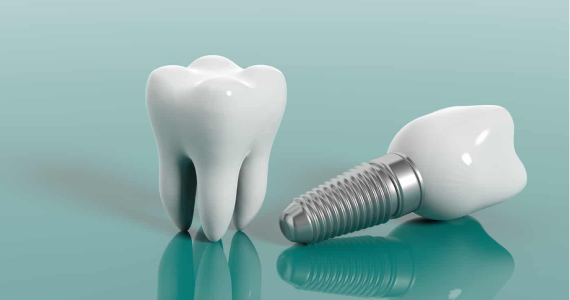
Immediate implant placement, also known as „immediate implant placement“, is a modern surgical-prosthetic procedure in which a dental implant (a small titanium screw replacing the root of a tooth) is inserted into the jawbone immediately after the extraction of the original tooth, in a single visit. In many cases, a provisional (temporary) crown can be placed on the implant. This means that the patient leaves the office not only with the implant, but also with a temporary tooth that provides immediate aesthetics and function. This eliminates the period when the patient would have to be toothless or wear a removable prosthesis.
This procedure represents a significant shift compared to the classic, so-called deferred implantation, where after tooth extraction, the bone waits for several months (usually 3-6) for healing before the implant is inserted. After healing (another 2-4 months), the final crown is placed. Immediate implantation significantly shortens the total treatment time and the number of necessary surgical procedures.
How is immediate implantation performed?
The immediate implantation process requires careful planning and precise execution. At the Dobrý Dent clinic, we proceed as follows:
- Thorough consultation and diagnosis: The first step is a detailed examination, including a 3D X-ray (CBCT). This scan allows us to assess in detail the condition of the bone (its volume, density and quality) at the planned implantation site, the position of the surrounding anatomical structures (nerves, cavities) and the condition of the root of the tooth intended for extraction. We will also assess your overall health and oral hygiene.
- Planning the procedure: Based on the CBCT scan and clinical examination, the doctor will precisely plan the position and size of the implant. We use digital technology for maximum accuracy.
- The procedure itself:
- Under local anesthesia (at Dobrý Dent we use the STA system for painless administration), the damaged tooth is gently removed. We try to preserve the surrounding bone and soft tissues as much as possible.
- The bed after the extracted tooth (alveolus) is carefully cleaned and prepared for implant placement.
- A dental implant of the selected size and type is inserted into the prepared bed.
- Ideally, if sufficient primary stability of the implant is achieved (its firm anchorage in the bone), an abutment (pillar) is placed on the implant and a temporary crown is made and placed. This crown is designed to be non-biting and not to burden the implant during healing, but at the same time to fulfill an aesthetic and partially functional role.
- Healing and final crown: After several months, when the implant is firmly connected to the bone (a process called osseointegration), the provisional crown is replaced with a final, definitive crown, which is custom-made from highly aesthetic and durable materials (e.g. all-ceramic) and fully restores the function and appearance of the lost tooth.
The entire surgical procedure (extraction and implantation, possibly with a provisional crown) usually takes 60 to 120 minutes, depending on the complexity of the case.
Main advantages of immediate implantation
Immediate implantation offers patients a number of significant benefits:
- Significant reduction in overall treatment time: The biggest advantage is the combination of two surgical phases (extraction and implantation) into one. The patient does not have to wait months for the bone to heal after extraction. The entire process from tooth loss to final replacement is much faster.
- Fewer surgical procedures: Instead of two separate operations, you only undergo one, which means less strain on the body, less stress and a shorter recovery time.
- Immediate aesthetic solution: Thanks to the possibility of placing a temporary crown immediately after implantation, you do not leave the office with a gap in the dental row. This is especially important in the front, visible section of the dentition. Your smile remains complete throughout the treatment.
- Better bone and gum preservation: An implant placed immediately after extraction helps maintain the original bone volume and gum shape around the tooth. It naturally fills the space after the root and stimulates the bone, thereby preventing its loss (atrophy), which commonly occurs after tooth extraction. This often leads to a better and more natural final aesthetic result.
- Higher patient comfort: There is no need to wear temporary removable restorations, which can be uncomfortable. The patient has a solid, albeit temporary, tooth almost immediately.
- Psychological benefit: Knowing that you will not be without a tooth for a day significantly reduces the stress and anxiety associated with tooth loss.
Who is an ideal candidate for immediate implantation?
Although immediate implantation is a very attractive method, it is not suitable for every patient and every situation. The decision always depends on a careful assessment by the doctor. Key factors include:
- Sufficient bone volume and quality: There must be enough healthy bone at the site of the extracted tooth to firmly anchor the implant and achieve so-called primary stability. This is the most important prerequisite.
- Absence of acute infection: There must be no active inflammation or purulent foci around the tooth intended for extraction. If an infection is present, it is usually necessary to extract the tooth first, clean the foci, and wait for healing before implanting.
- General health: The patient should be in good general health. Some diseases (e.g. decompensated diabetes, serious immune system diseases, ongoing oncological treatment) may be contraindications.
- Good oral hygiene: The patient’s ability and willingness to maintain perfect oral hygiene is essential for the long-term success of the implant.
- No smoking: Smoking significantly impairs healing and increases the risk of implant failure. Immediate implantation is often not recommended for heavy smokers.
- Tooth type and location: Immediate implantation is often performed on single-rooted teeth (incisors, canines, molars), but under favorable conditions it is also possible for molars.
- Anatomical conditions: The proximity of important structures such as nerves or the maxillary sinus must be taken into account.
At the Dobrý Dent clinic, we place maximum emphasis on preoperative diagnostics. Thanks to our modern CBCT device, we can create an accurate 3D model of your jaw and assess all relevant factors in detail. Based on this information, our experienced implantologist will suggest the most appropriate procedure and openly discuss with you the options, advantages and potential risks of immediate implantation in your specific case.
Why choose immediate implantation at Dobrý Dent in Prague?
Choosing the right clinic and experienced implantologist is key to the success of immediate implantation. Dobrý Dent, operating in Prague 5, Anděl since 2010, offers you a combination of expertise, state-of-the-art technology and an individual approach:
Experience and expertise
Our team of dentists has many years of experience in the field of dental implantology, including hundreds of successfully performed immediate implantations. We regularly educate ourselves at professional courses and congresses at home and abroad, so that we can offer you the most modern and effective procedures. Our doctors are experts in comprehensive planning and precise surgical execution.
Top-notch technologies for your comfort and safety
Investing in modern equipment allows us to perform immediate implantation with maximum accuracy, safety and comfort for the patient:
- CBCT 3D X-ray: An indispensable tool for detailed diagnostics and planning. It allows us to accurately measure the bone, identify anatomical structures and plan the ideal implant position before the procedure itself. It minimizes the risk of complications.
- Intraoral 3D scanner: For making digital impressions for temporary and final crowns. It is much more comfortable than classic impression materials, faster and extremely accurate. It ensures perfect seating of your new crown.
- Operating microscope: During surgery, we use a surgical microscope that magnifies the surgical field several times. This allows the doctor to work with maximum precision, more gentle on the tissues and with better overview, which is essential for successful implant placement and minimizing invasiveness.
- Painless STA anesthesia (Single Tooth Anesthesia System): For your maximum comfort, we use the computer-controlled STA Wand anesthetic application system. This system ensures slow and controlled application of anesthetic, which minimizes or completely eliminates the pain associated with the injection. This makes the procedure much more pleasant for you.
Individual approach and planning
Each patient is unique to us. We spend enough time understanding your needs, expectations and any concerns. Based on a thorough diagnosis, we will prepare an individual, tailor-made treatment plan for you. We will explain the entire procedure in detail, answer all your questions and together we will choose the best solution for your smile.
Comprehensive care under one roof
At Dobrý Dent, we offer a wide range of dental services, from preventive care and dental hygiene, through conservative dentistry, endodontics (root canal treatment), periodontology, to prosthetics and dental surgery, including implantology. All phases of your treatment can take place in one place, under the supervision of a well-coordinated team of experts.
Modern and pleasant environment
Our clinic at Jindřicha Plachty 535/16, Prague 5 – Smíchov (near Anděl) is designed to make you feel as comfortable and relaxed as possible. The modern interior, friendly staff and emphasis on painless treatment contribute to a positive experience for our patients.
The process of immediate implantation in our clinic Dobrý Dent
If you are considering immediate implantation, here is an overview of the steps that await you in our clinic:
- Introductory consultation: Make an appointment for a non-binding consultation. We will discuss your wishes and assess the condition of your teeth and oral cavity.
- Detailed diagnostics: We will perform the necessary examinations, in particular a 3D CBCT X-ray and, if necessary, a digital scan of your teeth.
- Development of a treatment plan: Based on the diagnostics, we will assess whether you are a suitable candidate for immediate implantation. If so, we will develop a detailed treatment plan including a timetable and price calculation. We will explain everything to you clearly.
- Surgical procedure: At the agreed date, we will perform a gentle tooth extraction under local anesthesia (STA), insert the implant and, in most cases, also place a temporary crown. You will receive detailed instructions for home care.
- Check-up visits and healing: We will monitor the healing process during several check-up visits.
- Placement of the final crown: After the implant has successfully healed (usually in 3-6 months), we will fabricate and place a definitive, highly aesthetic crown.
- Regular check-ups and dental hygiene: Regular check-ups and professional dental hygiene in our clinic are key to the long-term life of the implant.
Immediate vs. Delayed Implantation: When to Choose Which Method?
Immediate implantation is the ideal choice if:
- The conditions are met (sufficient bone, no infection).
- The patient wants to replace the tooth as quickly as possible and minimize the number of procedures.
- Great emphasis is placed on immediate aesthetics (anterior dentition).
- There are favorable anatomical conditions.
Delayed (two-stage) implantation is more suitable if:
- There is an extensive infection or cyst at the extraction site.
- There is not enough quality bone for primary stability of the implant (augmentation may be necessary).
- The patient has certain health complications or is a heavy smoker.
- The tooth extraction was complicated and there was a major loss bone.
The decision on the most suitable type of implantation is always made by the doctor based on an individual assessment of the situation after a thorough diagnosis.
Post-procedure implant care and long-term success
Proper care of your dental implant is key to its long-term durability and trouble-free function. Immediately after the procedure, it is important to follow your doctor’s instructions:
- Cool your face at the site of the procedure to reduce swelling.
- Avoid physical exertion.
- Eat a softer diet and do not bite directly on the temporary crown.
- Carefully but gently clean the area around the implant according to instructions.
- Take prescribed medications (antibiotics, analgesics).
- Do not smoke.
In the long term, caring for a dental implant is very similar to caring for your own teeth. It includes:
- Regular and thorough cleaning: Using a toothbrush, interdental brushes and possibly dental floss to remove plaque from the surface of the crown and around the implant.
- Regular visits to a dental hygienist: We recommend professional cleaning at least twice a year. The hygienist has special tools for gentle and effective cleaning around implants.
- Regular check-ups with a dentist: Check-ups (usually 1-2 times a year) include clinical examinations and X-rays to verify the condition of the bone around the implant and detect any problems early.
With proper care and regular check-ups, a dental implant can serve for many years, often even a lifetime. The success rate of modern implantology is very high, exceeding 95%.